


WCA European Championship 2026 – Arnhem, The Netherlands
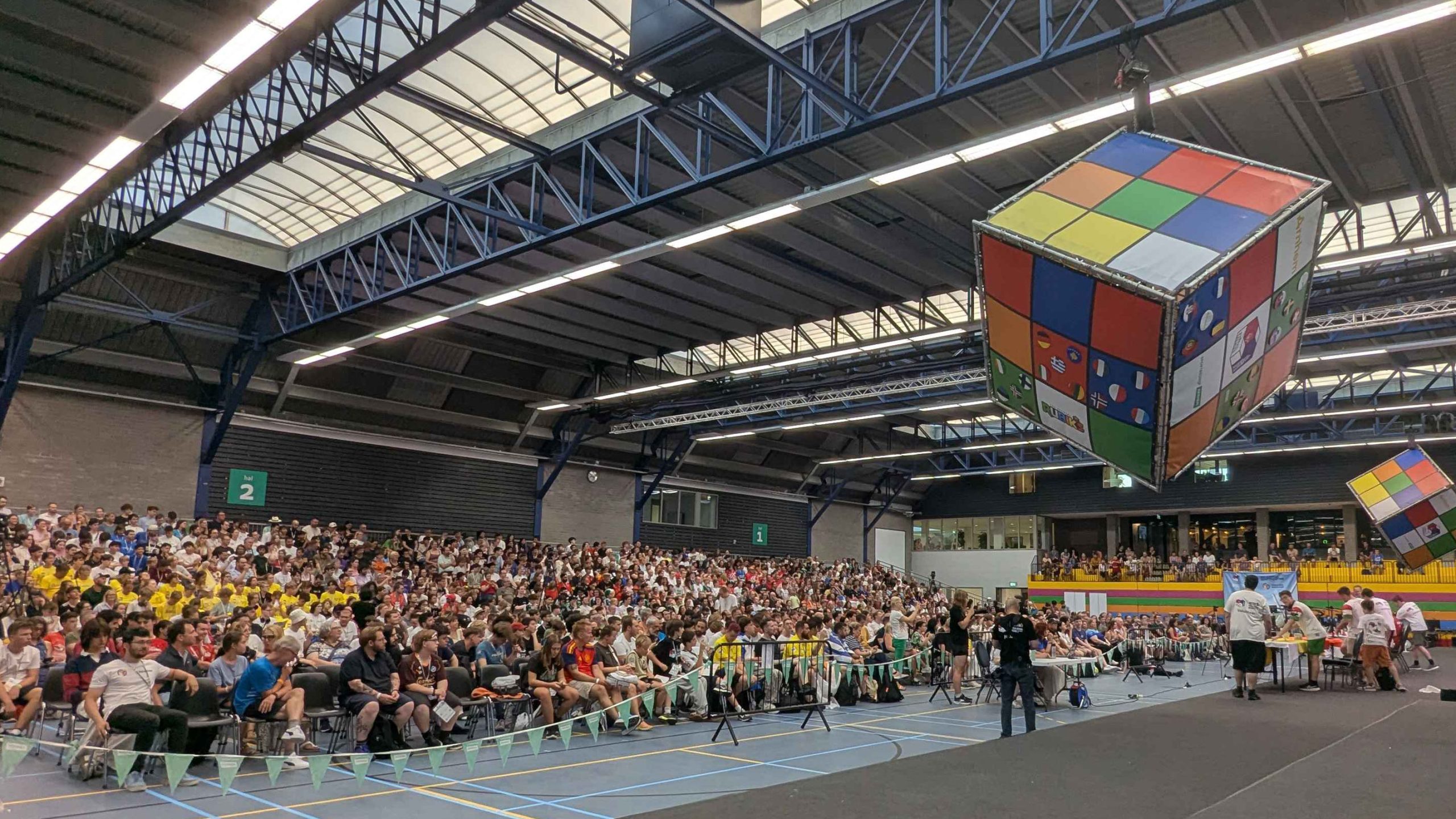
This past weekend, the Rubik’s WCA European Championship 2026 were held in Arnhem, the Netherlands! 1,200 participants from 53 nations were registered to compete in 17 different events over four days. As usual, the classic 3×3 cube attracted the most participants, but competitions in smaller puzzles, larger puzzles and solving puzzles in completely different ways, such as blindfolded, with one hand or in as few moves as possible were also held.
The opening Thursday mainly contained qualifying rounds and semi-finals in various events. Immediately after lunch, an opening ceremony was held with speeches from organizers, sponsors and others. In the evening, after the dinner break, a nations cup was traditionally held with 24 participating countries. Three participants per country competed in a relay, a format where the fastest total finishing time after the three participants had each solved a 3×3 went on to win each match. Many countries had strong spectator support, including Norway, who, inspired by the football World Cup, were able to “row” to the delight of the audience. The favourites, Poland, surprisingly lost their semifinal against the Netherlands after their final team member accidentally finished his solution in the wrong way and thereby stopped the timer with an unsolved cube in front of him, something that disqualified the team. This allowed the Netherlands to win the final against Germany, to the great joy of the home crowd.
Friday continued with first rounds and semi-finals in other disciplines. The first final session of the weekend saw cubing superstar Tymon Kolasiński secure two golds in 4×4 and 7×7. The evening also crowned the last ever European Clock champion Antoni Stojek, as the event will be removed after the 2027 World Championships to be replaced by FTO afterwards.
Saturday featured the final rounds in the mental events of 4×4 and 5×5 Blindfolded as well as the 3×3 Fewest Moves event. After the first round of the 3×3 event, the evening finals saw yet another Polish display of skill as Tymon secured yet another gold in the 6×6 event while Teodor Zajder won 2×2 with an incredible average of only 1.01 seconds. Following him in 2×2 was Emanuel Schelin from Sweden, marking an incredible day for us Swedes with three secured medals seeing Frank Lindblom secure a silver in Skewb and Cuboss’ own Daniel Wallin secure a bronze in 5×5 Blindfolded.
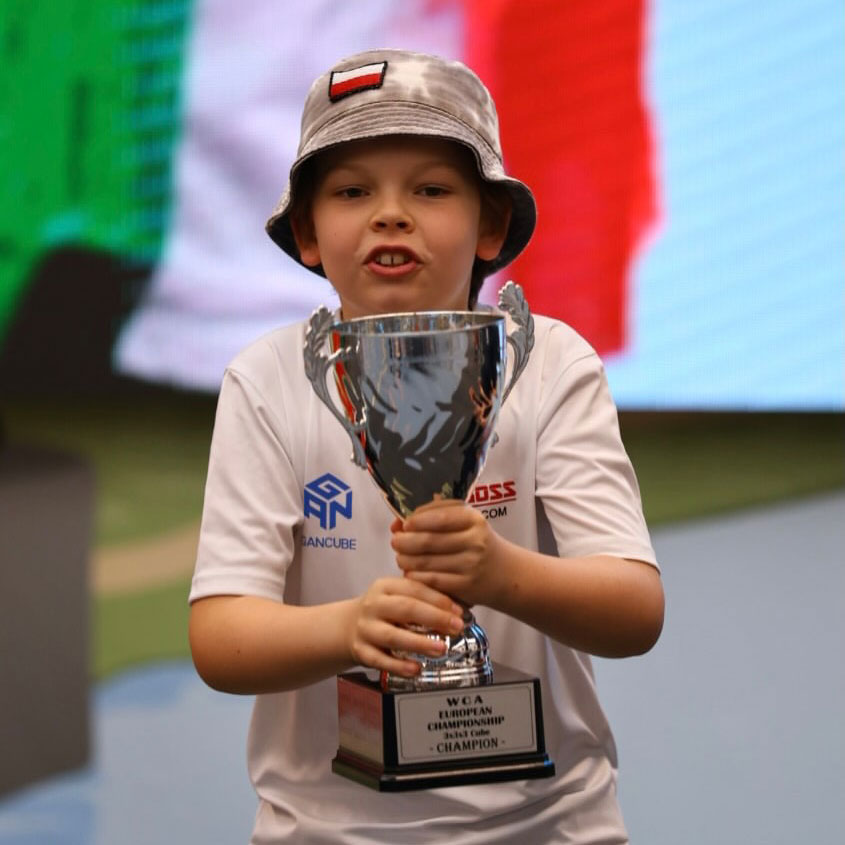
Sunday’s final session started with the four last normal events, finishing Poland’s incredible run to secure the first place in the medal table in outstanding fashion. Following was the big head to head final in 3×3. This final was very exciting, where Poland managed to secure both bronze from Tymon Kolasiński and gold from Cuboss-sponsored Teodor Zajder, with a winning average in the final’s five solves of 5.46 seconds. A surprising silver was finally secured by Italy’s Valerio Locatelli. At the award ceremony shortly thereafter, all medalists were awarded medals, statuettes and cheers from the audience. We were not told where the 2028 European Championships will take place however, meaning we will instead have to focus solely on the 2027 World Speedcubing Championships, which will take place in Uppsala, Sweden on 22-25 July 2027.
