


Lube Service
Buying guide
Speedcube reviews
Top rated Speedcubes

Speedcubing notations
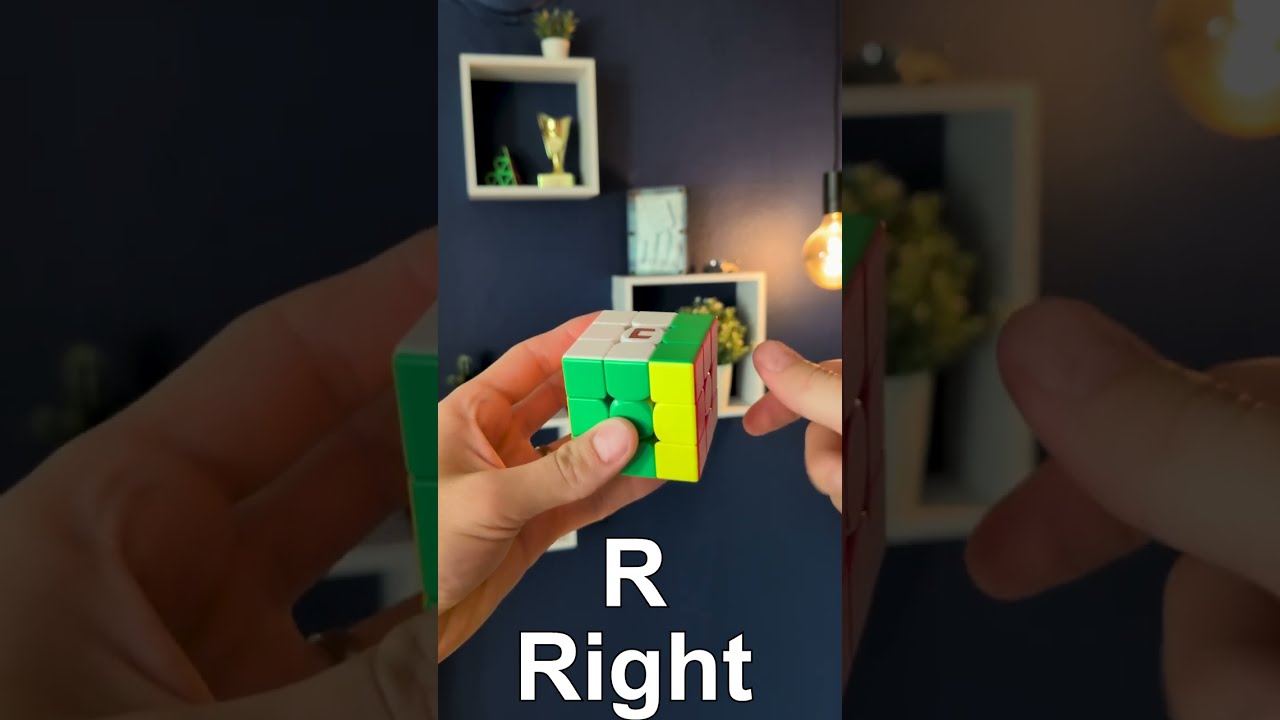
Welcome to our comprehensive guide of the official speedcubing notations. These are used in Rubik’s cube and speedcubing guides and for scrambling cubes at official competitions.
How the guide works
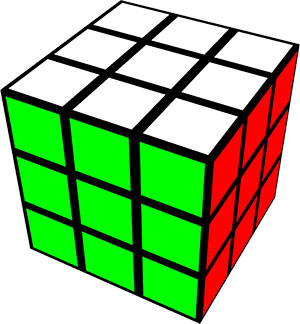
In this guide the cube starts from a solved position with the green side facing front, the white side facing up, and the red side to the right (as shown in the image). The images in the guide show what the cube should look like after you have performed the move from this starting position.
Why should you learn notations?
Notations are frequently used in guides for solving the cube. In addition, notations are used at cube competitions to ensure that everyone gets the exact same scrambles. If you want to help out as a scrambler at competitions, you must know these notations. If you are a beginner, we recommend just learning the “basic” notations below.
What does the number 2 mean?
The number 2 means that you should turn the layer twice, which equals 180 degrees or a half-turn. When an algorithm says “F2”, it doesn’t really matter if you do F2 or F2′. Since you are turning the layer 180 degrees, it will end up in the exact same position whether you turn it counter-clockwise or clockwise. So why do you see F2′ in some algorithms and F2 in others? It simply comes down to hand positioning. The move that follows can be easier to perform quickly if you hold your hand in a certain way.
Clockwise and Counter-clockwise
If the letter stands alone, for example “F”, turn clockwise. If the letter has an apostrophe after it, for example F’, turn counter-clockwise.
Parentheses ( )
Parentheses are used to split up algorithms and make them easier to read. If there is a number next to a parenthesis, it means that the moves inside the parentheses should be performed multiple times. Example: The algorithm (F) (R U R’ U’)3 (F’) is the exact same as (F) (R U R’ U’) (R U R’ U’) (R U R’ U’) (F’).
Basic
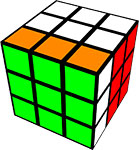
F
Front
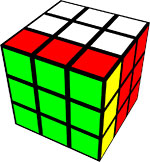
F’
Front counter-clockwise
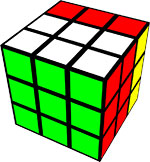
B
Back
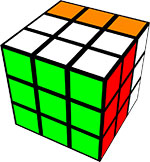
B’
Back counter-clockwise
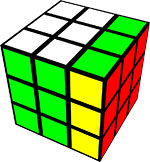
R
Right
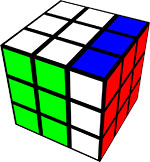
R’
Right counter-clockwise
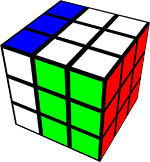
L
Left
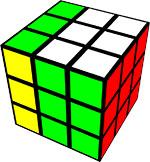
L’
Left counter-clockwise
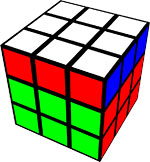
U
Up
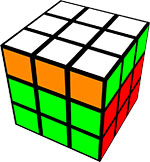
U’
Up counter-clockwise
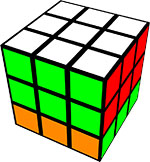
D
Down
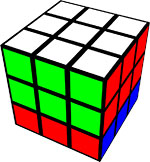
D’
Down counter-clockwise
Middle Layers
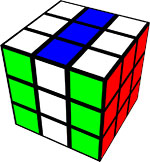
M
Middle
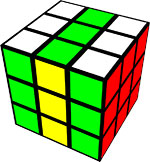
M’
Middle counter-clockwise
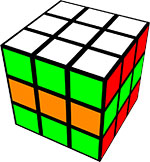
E
Equatorial
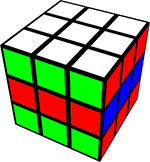
E’
Equatorial counter-clockwise
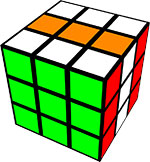
S
Standing
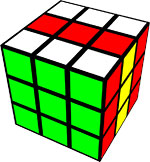
S’
Standing counter-clockwise
Cube rotations
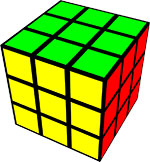
x
Tilt the cube away from yourself
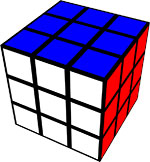
x’
Tilt the cube towards yourself
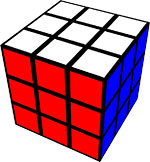
y
Rotate so that the right side is facing towards yourself
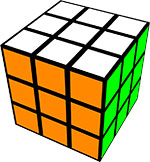
y’
Rotate so that the left side is facing towards yourself
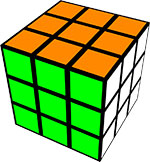
z
Tilt the cube to the right
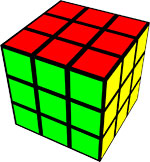
z’
Tilt the cube to the left
Two layers at the same time
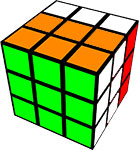
Fw (f)
Front wide
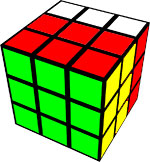
Fw’ (f’)
Front wide counter-clockwise
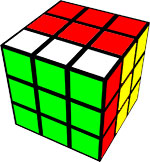
Bw (b)
Back wide
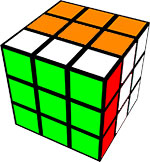
Bw’ (b’)
Back wide counter-clockwise
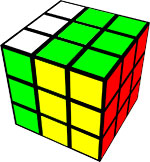
Rw (r)
Right wide
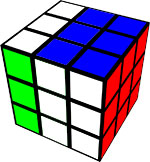
Rw’ (r’)
Right wide counter-clockwise
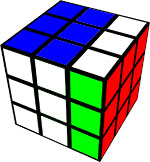
Lw (l)
Left wide
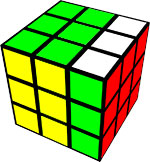
Lw’ (l’)
Left wide counter-clockwise
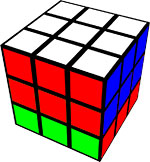
Uw (u)
Up wide
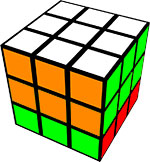
Uw’ (u’)
Up wide counter-clockwise
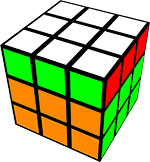
Dw (d)
Down wide
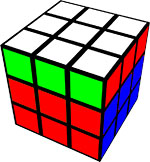
Dw (d’)
Down wide counter-clockwise